
Published in 1918, The Madman: His Parables and Poems was Kahlil Gibran’s first English-language book — a collection of 34 parables and poems that announced a new voice in world literature. Written in the spare, parabolic style that would later define The Prophet, The Madman introduced English-speaking readers to Gibran’s distinctive fusion of Eastern mysticism, Western philosophical provocation, and unapologetic honesty about the human condition.
The book’s central question is dangerous: What if the person society calls insane is the only one seeing clearly?
The Premise: Masks and Madness
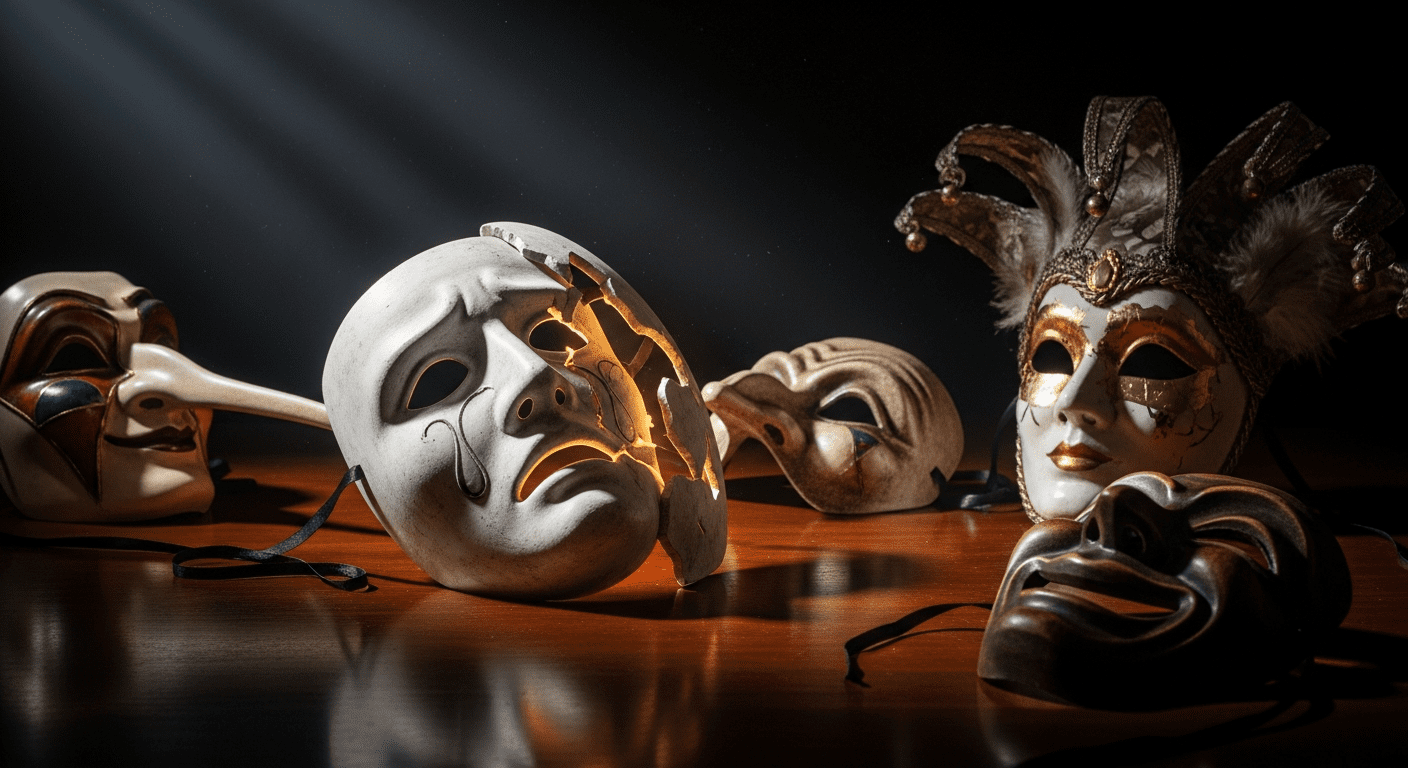
The collection opens with a prose poem that frames everything that follows. The narrator tells of how he once wore seven masks — one for each day of the week — to navigate social life. One day, the masks are stolen, and he walks through the streets without them. People flee from him, declaring him mad.
“Blessed, blessed are the thieves who stole my masks,” the narrator says.
This opening establishes Gibran’s central metaphor: sanity, as society defines it, is performance. The masks we wear — politeness, conformity, agreeable opinions, suppressed desires — protect us from social exile but prevent genuine selfhood. The Madman is not insane. He is unmasked. And in a world of masks, authenticity looks like madness.
Key Parables
“The Sleepwalkers”
Two figures meet in a garden. One is sleepwalking; the other has had the same experience. They recognize each other with relief — and then the parable delivers its insight: most people navigate life asleep, performing their roles without genuine awareness. The rare moment of genuine connection happens between those who recognize their shared condition.
This parable anticipates Eckhart Tolle’s teachings about unconscious living by nearly a century.
“The Two Cages”
A bird in a cage meets a bird in the air. Each envies the other — the caged bird dreams of freedom, the free bird dreams of security. Neither sees its own situation clearly. Gibran uses this parable to expose how desire distorts perception: we idealize what we lack and devalue what we have.

“The Seven Selves”
A man’s seven selves argue over which is the true self — the body, the emotions, the intellect, the imagination, the will, the social self, and a seventh that remains silent. The parable is a compressed exploration of identity and the multiplicity of the human psyche, anticipating psychological theories about the constructed nature of the self.
“Night and the Madman”
The Madman addresses Night as a companion and equal. Where others fear darkness, he finds in it a mirror — a space where pretense becomes impossible and the true self is revealed. Night, in Gibran’s symbolism, represents the inner life that society’s daylight obscures.
“The Wise Dog”
A dog passes other dogs who bark at the passing caravan. He considers barking too — it is what dogs do. But he realizes he has nothing to bark at. He watches the caravan pass in silence. The parable is Gibran’s sharpest commentary on conformity: most social behavior is performed not because it means something but because others are performing it.
Why The Madman Matters
It introduced Gibran’s English voice. Having already established himself as a literary rebel in Arabic — his earlier works were publicly burned in Beirut — Gibran used The Madman to announce his presence to the English-speaking world. The spare, rhythmic prose he developed here became the foundation for all his subsequent English work.
It refuses comfort. Unlike much spiritual literature, The Madman does not reassure the reader. It provokes, unsettles, and challenges. Gibran is not interested in making you feel better — he is interested in making you see more clearly, even when what you see is uncomfortable.
It anticipates modern psychology. The collection’s treatment of masks, social performance, the multiplicity of self, and the relationship between conformity and genuine identity reads as remarkably contemporary. Gibran was exploring territory that psychology would not formalize for decades.
It is the seed of The Prophet. Readers familiar with The Prophet will recognize many of its themes in embryonic form here. The Madman tears down; The Forerunner begins building; The Prophet completes the architecture.
Reading The Madman
The collection is short — most readers finish it in under an hour. But its impact is disproportionate to its length. The parables are compressed and allusive, designed to work beneath the surface of conscious understanding.
Approach it slowly. Read one or two parables at a time. Let them sit. Return to the ones that provoke the strongest reaction — those are the ones that have something to show you.
For readers who want to trace Gibran’s development, read The Madman first, then The Forerunner, then The Prophet. For his complete bibliography, see books by Kahlil Gibran. For curated selections of his most powerful lines, explore his quotes on life and quotes on love.
Frequently Asked Questions
What is The Madman by Kahlil Gibran about?
A collection of 34 parables and poems exploring authenticity, conformity, the masks people wear in social life, and the thin line between society’s definition of sanity and genuine freedom. The central figure — the Madman — is not insane but unmasked, seeing clearly in a world that confuses performance with reality.
Is The Madman connected to The Prophet?
Yes. The Madman (1918), The Forerunner (1920), and The Prophet (1923) form a trilogy of sorts. The Madman strips away illusion, The Forerunner builds philosophical frameworks, and The Prophet offers the mature, complete expression of Gibran’s vision.
Why is the book called The Madman?
The title references the narrator’s experience of being called mad after his social masks are stolen. In Gibran’s framework, “madness” is society’s label for authenticity — for the refusal to perform conventional roles. The title challenges the reader to question who is truly mad: the one who sees clearly or the many who agree to look away.
How long does it take to read The Madman?
Under an hour for most readers. The collection is deliberately compact — 34 short pieces that prioritize compression and impact over length. It rewards rereading, as the parables reveal additional layers with each encounter.
What is the best Gibran book to read first?
The Prophet is the most accessible and representative starting point. The Madman is ideal as a second read for those who want to explore Gibran’s more provocative, challenging voice. See our reading guide for the complete recommended order.