
Why The Prophet Still Matters
The Prophet, published in 1923, is the most widely read work of poetry in the English language after Shakespeare. It has sold over 100 million copies and been translated into more than 100 languages. Yet most people who own a copy have never read it cover to cover — and fewer still have grappled with what Gibran was actually trying to say.
The book follows Almustafa, a prophet who has lived twelve years in the city of Orphalese. As his ship arrives to take him home, the townspeople ask him to share his wisdom on the subjects that matter most in human life. His responses form 26 prose poems — each one a meditation on a fundamental aspect of human experience.
What follows is a guide to each chapter: what Gibran wrote, what he meant, and why it still applies.
For a broader look at Gibran’s life and philosophy, see our comprehensive Gibran overview. For his most powerful individual lines, explore our collections of quotes on love and quotes on life.
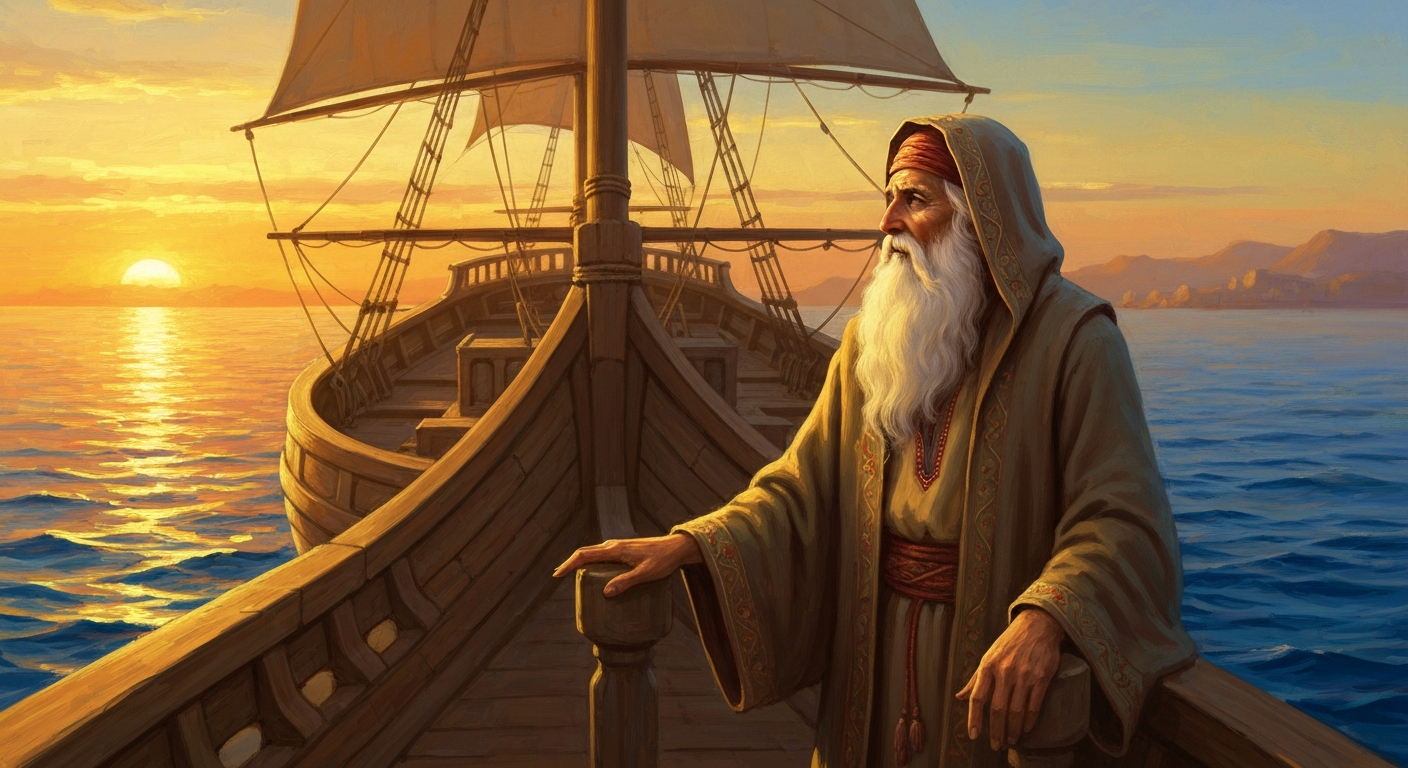
The Coming of the Ship
The framing narrative: Almustafa has waited twelve years for the ship that will carry him home. When it arrives, he feels both joy and grief — joy for his return, grief for leaving the people he has come to love. The townspeople gather and ask him to speak before he goes.
What it means: Every significant departure is also a homecoming. Gibran opens with the fundamental tension of human life: we belong fully to no single place, and every meaningful connection carries the shadow of eventual separation. The prophet’s grief isn’t weakness — it’s the price of having loved a place deeply.
On Love
The first and most famous chapter. Almustafa describes love not as comfort or possession but as a force that simultaneously wounds and heals, that demands everything and gives everything. Love, he says, grinds you like wheat, kneads you, and exposes you to sacred fire — all so you can become bread for the sacred feast of life.
What it means: Gibran rejected the romanticized, sentimental version of love common in his era. His love is transformative and often painful — it strips away pretense and forces growth. The chapter’s central argument is that love is not something you choose but something that chooses you, and your only real choice is whether to surrender to it fully or try to direct it (which always fails).

On Marriage
Almustafa tells a newly married couple to love each other but not make a bond of love — to stand together but not too close, for the pillars of a temple stand apart, and the oak and cypress do not grow in each other’s shadow.
What it means: This is Gibran’s most radical chapter for its time — and still radical now. He argues that healthy marriage requires maintained individuality. The spaces between partners aren’t emptiness — they’re what allows each person to remain whole. Codependence isn’t love; it’s the destruction of the two separate beings that love requires.
On Children
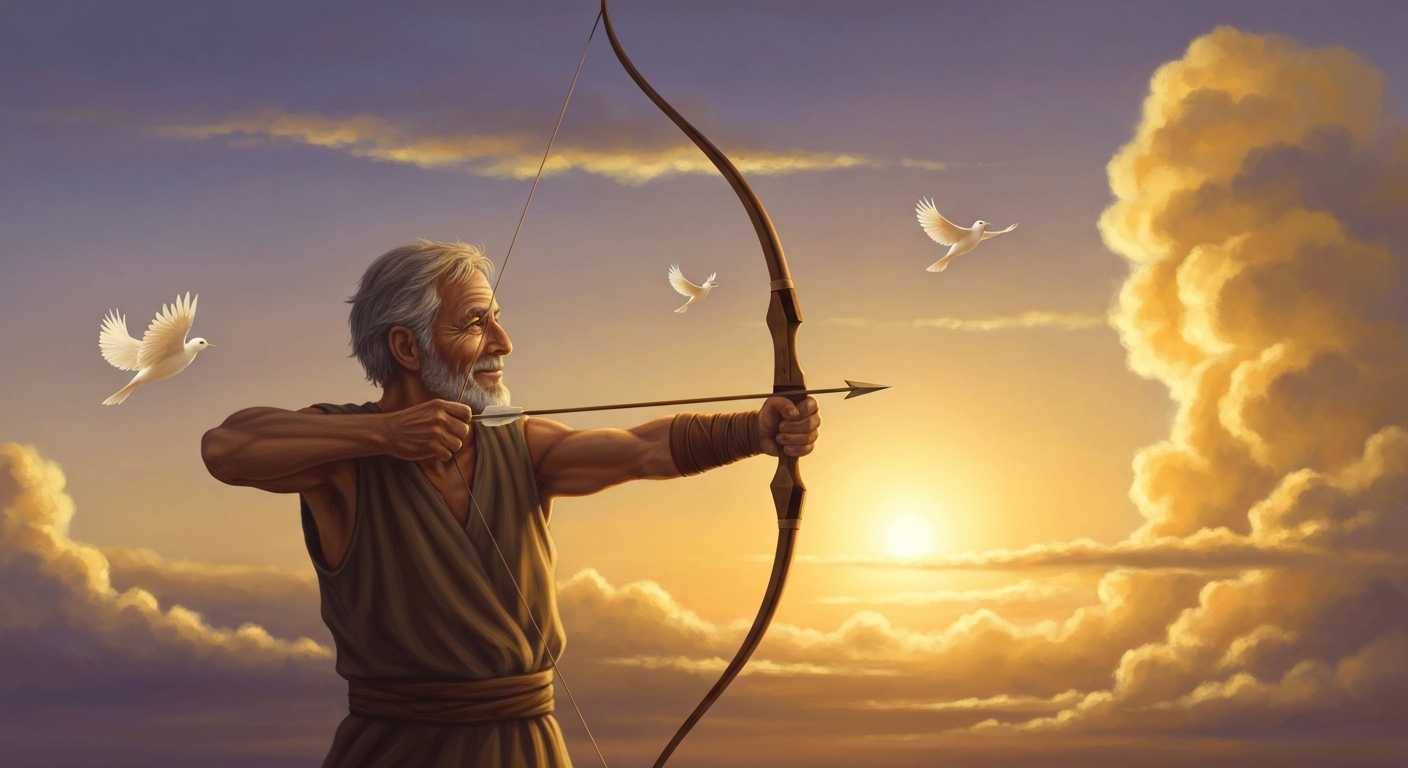
Parents are bows, children are living arrows. You may house their bodies but not their souls. You may strive to be like them, but seek not to make them like you.
What it means: Children don’t belong to their parents — they belong to life itself. Gibran wrote this from the perspective of someone raised in a culture of strong parental authority, and his message was deliberately challenging: your children’s thoughts, dreams, and futures are their own. Your role is to launch them, not direct their flight.
On Giving
True giving, Almustafa says, happens when you give of yourself — not from your surplus, but from your substance. Those who give with pain are blessed. Those who give to avoid pain have already lost the gift.
What it means: Gibran distinguishes between transactional generosity (giving to feel good or to be seen) and authentic giving (which costs something real). The chapter anticipates modern research on the “helper’s high” — the paradox that giving away resources can increase well-being, but only when the giving is genuine rather than strategic.
On Eating and Drinking
When you eat, know that you are eating the earth itself. When you drink, you drink the tears of the sky. The act of eating is an act of connection with the life that sustains you.
What it means: This chapter is Gibran’s meditation on mindfulness and gratitude, long before either term became popular. Every meal is a participation in the cycle of life and death. The mindless consumption of food — eating while distracted, eating without awareness of where it came from — severs a connection that Gibran considered sacred.
On Work
Work is love made visible. If you bake bread with indifference, you bake a bitter bread. If you cannot work with love, it’s better to sit at the gate and take alms from those who do.
What it means: Gibran’s view of work is neither the Protestant ethic (work as duty) nor the modern “do what you love” idealism. It’s more specific: whatever work you do, bring presence and care to it. The quality of your attention determines the quality of your output — and ultimately, the quality of your life.
On Joy and Sorrow
Joy and sorrow are inseparable. The deeper that sorrow carves into your being, the more joy you can contain. The well from which your laughter rises was often filled with tears.
What it means: You can’t selectively numb emotions. If you close yourself to grief, you also close yourself to joy. Gibran anticipates what psychologist Susan David calls “emotional agility” — the understanding that difficult emotions aren’t obstacles to a good life but essential components of one.
On Houses
Your house is your larger body. Don’t let it become a gilded cage that separates you from the open fields. The house should hold you but not confine you.
What it means: Material comfort, taken too far, becomes a prison. Gibran isn’t anti-shelter — he’s warning against the human tendency to build ever-more-elaborate walls between ourselves and the natural world, the discomfort of weather, and the reality of impermanence.
On Clothes
Clothes conceal the beauty of the body. If Almustafa could, he’d have people meet the sun and wind with their skin rather than their garments.
What it means: Read symbolically (as Gibran intended), this is about authenticity. The “clothes” we wear — social masks, professional personas, curated identities — hide who we actually are. The invitation is to shed unnecessary layers of pretense.
On Buying and Selling
The marketplace should be a place where people exchange not just goods but the gifts of the earth. Commerce without fairness is theft wearing a pleasant face.
What it means: Ethical commerce. Gibran envisions exchange as a form of relationship rather than exploitation — a vision that resonates with modern fair trade and conscious capitalism movements.
On Crime and Punishment
The criminal and the righteous walk the same road — the criminal is simply the one who fell first. You cannot separate the just from the unjust.
What it means: Gibran challenges the clean separation between “good people” and “bad people.” Everyone carries both capacities. Punishment that ignores this shared humanity doesn’t heal — it merely transfers pain.
On Laws
Laws are like sun shadows — they follow the sun but cannot walk beside it. When law becomes disconnected from the spirit of justice, it becomes a tool of oppression.
What it means: External rules are necessary but insufficient. True justice requires internalized principles — conscience — not just compliance with written codes.
On Freedom
True freedom isn’t the absence of constraint — it’s the transcendence of the constraints you’ve imposed on yourself. When you lose the fear of hunger, you no longer need food to be your security.
What it means: Most of what limits us is internal. Gibran distinguishes between political freedom (from external oppression) and psychological freedom (from our own attachments, fears, and self-imposed limitations). The deeper freedom is always the latter.
On Reason and Passion
Reason and passion are the rudder and sail of your seafaring soul. Without reason, passion is a flame that consumes itself. Without passion, reason is a cold wind that moves nothing.
What it means: Neither pure logic nor pure emotion leads to a good life. Gibran advocates for integration — letting passion provide the energy and direction, while reason provides the steering. This chapter anticipates modern neuroscience’s understanding that emotion and cognition are not opposed but interdependent.
On Pain
Pain is the breaking of the shell that encloses your understanding. It is bitter medicine administered by the physician within you.
What it means: Pain isn’t meaningless — it’s the mechanism through which growth occurs. Gibran doesn’t glorify suffering, but he insists that the instinct to avoid all pain leads to a life that’s safe but shallow.
On Self-Knowledge
Your heart knows in silence the secrets of the days and the nights. You already possess the wisdom you seek — the work is learning to listen.
What it means: Self-knowledge isn’t acquired from outside — it’s uncovered from within. This aligns with contemplative traditions from Zen Buddhism to Taoism: the answers are already present; the practice is removing the noise that obscures them.
On Teaching
The teacher who walks in the shadow of the temple gives not of their wisdom but of their faith and lovingness. True teaching doesn’t transfer knowledge — it awakens what the student already knows.
What it means: Gibran was a teacher himself, and this chapter reflects his experience: the best teaching isn’t instruction but inspiration. The role of the teacher is to create conditions for discovery, not to fill empty vessels.
On Friendship
Your friend is your needs answered. In the sweetness of friendship, let there be laughter and shared pleasures. But let there be also solitude in togetherness.
What it means: Like marriage, friendship requires space. The healthiest friendships are those where both people remain complete individuals who choose to share their completeness — not two incomplete people trying to fill each other’s gaps.
On Talking
You talk when you cease to be at peace with your thoughts. When you can no longer dwell in the solitude of your heart, you live in your lips, and sound becomes a diversion.
What it means: Much speech is avoidance. Gibran values silence as the space where thought actually deepens. This resonates in an era of constant communication — the compulsion to fill every silence may be a symptom of discomfort with our own inner life.
On Time
Time is not measured by the clock but by the heart. You would measure time the measureless and adjust your conduct according to the seasons — but the timeless in you is aware of life’s timelessness.
What it means: Clock time and experienced time are different things. An hour of deep conversation can feel like minutes; an hour of boredom can feel like years. Gibran suggests that our obsession with managing time misses the point: it’s depth of experience, not duration, that matters.
On Good and Evil
You are good when you walk to your goal firmly with bold steps. Yet you are not evil when you go there limping. The good in you is your longing for your larger self.
What it means: Goodness isn’t a fixed state — it’s a direction. Even faltering movement toward your best self is fundamentally good. Evil, for Gibran, isn’t a cosmic force but a form of self-deprivation — cutting yourself off from your own potential.
On Prayer
Prayer is not asking but expanding your consciousness into the universe. You pray in your distress and need — but you should also pray in the fullness of your joy.
What it means: Gibran redefines prayer as a practice of awareness rather than petition. It’s not about requesting divine intervention but about expanding your sense of connection to something larger than yourself. This chapter bridges religious practice and mindfulness meditation.
On Pleasure
Pleasure is a freedom song, but it is not freedom itself. It is the blossoming of your desires, but it is not their fruit.
What it means: Pleasure isn’t wrong, but it’s incomplete. Mistaking pleasure for fulfillment is like mistaking flowers for fruit — beautiful, but not nourishing. Gibran advocates for enjoyment without attachment: experience pleasure fully, then let it go.
On Beauty
Beauty is not in the face but in the light of the heart. Beauty is eternity gazing at itself in a mirror. You are eternity and you are the mirror.
What it means: Beauty, for Gibran, is a mode of perception, not a property of objects. When you see beauty in something, you’re recognizing the eternal in the temporary. This transforms aesthetics from judgment (“Is this beautiful?”) into practice (“Am I seeing deeply enough?”).
On Religion
Who can separate faith from actions, or belief from occupations? Your daily life is your temple and your religion.
What it means: Gibran, raised Maronite Christian but deeply influenced by Sufism, Islam, and Eastern philosophy, rejects the compartmentalization of the sacred. Religion isn’t what you do on Sunday or in a mosque — it’s how you treat people, how you do your work, how you live every hour.
On Death
Death is not the opposite of life but a continuation of it. What is it to die but to stand naked in the wind and melt into the sun?
What it means: The final chapter returns to the theme of the opening: departure is not ending but transformation. Gibran’s view of death is neither fearful nor dismissive. It’s an acceptance of death as the natural completion of a life fully lived — one more transition in the endless cycle of being.
The Farewell
Almustafa boards his ship and departs, promising that he will return. The mist dissolves, and the people of Orphalese go their separate ways — but not empty-handed.
What it means: The book ends as it began — with departure. But now the departure carries meaning. The prophet’s wisdom doesn’t leave with him; it lives in the people who heard it. Knowledge, once shared, cannot be taken back.
Reading The Prophet Today
A century after its publication, The Prophet endures because it addresses universal experiences — love, loss, work, death, freedom, identity — without the cultural specificity that dates most philosophical writing. Gibran wrote from a place between East and West (he was Lebanese, living in New York), and that liminal position gave him access to perspectives that transcend any single tradition.
The best way to read The Prophet is slowly — one chapter per day, sitting with the ideas before moving to the next. It’s a book designed for re-reading. What you get from it at 25 is different from what you get at 45 or 65.
For deeper explorations of Gibran’s other works, see our guides to The Broken Wings, Sand and Foam, A Tear and a Smile, and The Madman.
Frequently Asked Questions
What is The Prophet by Kahlil Gibran about?
The Prophet follows Almustafa, a wise man who shares his insights on 26 fundamental topics of human life — love, marriage, children, work, joy, sorrow, death, and more — with the people of the city where he has lived for twelve years, just before departing by ship. Each chapter is a prose poem offering philosophical guidance on its subject.
How many chapters are in The Prophet?
The Prophet contains 28 sections: an opening narrative (“The Coming of the Ship”), 26 thematic prose poems, and a closing farewell. The 26 central chapters each address a different aspect of human experience, from love and marriage to crime, beauty, and death.
What is the most famous chapter of The Prophet?
“On Love” and “On Children” are the most frequently quoted chapters. “On Love” is often read at weddings, while “On Children” — with its image of parents as bows and children as living arrows — has become one of the most recognized passages in world literature.
Is The Prophet a religious book?
Not in any conventional sense. Gibran was influenced by Christianity, Islam, Sufism, and Eastern philosophy, and The Prophet draws from all these traditions without belonging to any of them. The book addresses spiritual themes — prayer, death, the nature of the soul — but does so in universal terms that transcend any single religious framework.
Why is The Prophet so popular?
Several factors explain its enduring appeal: the writing is beautiful but accessible; the topics are universal; the advice is specific enough to be useful but open enough to apply across cultures and eras; and the book’s brevity (it can be read in under two hours) makes it approachable. It’s also a book that reveals different meanings at different stages of life, rewarding re-reading.
What should I read after The Prophet?
Gibran’s other works extend the themes of The Prophet: Sand and Foam for aphorisms and short meditations, The Broken Wings for his autobiographical novel about love and loss, and The Madman for his most provocative parables. For similar philosophical depth from other traditions, explore our guides to the Bhagavad Gita and Roman Stoic philosophy.