
Why Take Your Meditation Outside?
Most meditation advice assumes you’re sitting in a quiet room. But humans evolved outdoors. Our nervous systems are wired to respond to natural environments — the sound of running water, the smell of earth after rain, the feeling of wind on skin. Taking advantage of that wiring makes meditation easier, not harder.
Research backs this up. A 2019 study in Frontiers in Psychology found that spending just 20 minutes in a natural setting significantly reduced cortisol levels — even without formal meditation. Combine that natural stress reduction with intentional meditation practice, and you get effects that indoor practice alone can’t match.
Outdoor meditation also solves a common beginner problem: sensory deprivation. In a quiet room, your mind has nothing to anchor to except your thoughts, which makes it easier to get pulled into mental loops. Outside, you have a rich tapestry of sensory input — birdsong, shifting light, temperature changes — that gives your attention natural resting points.
Here are five outdoor meditation practices, from the simplest (you can start today) to the more involved. None require any equipment beyond what you’re already wearing.
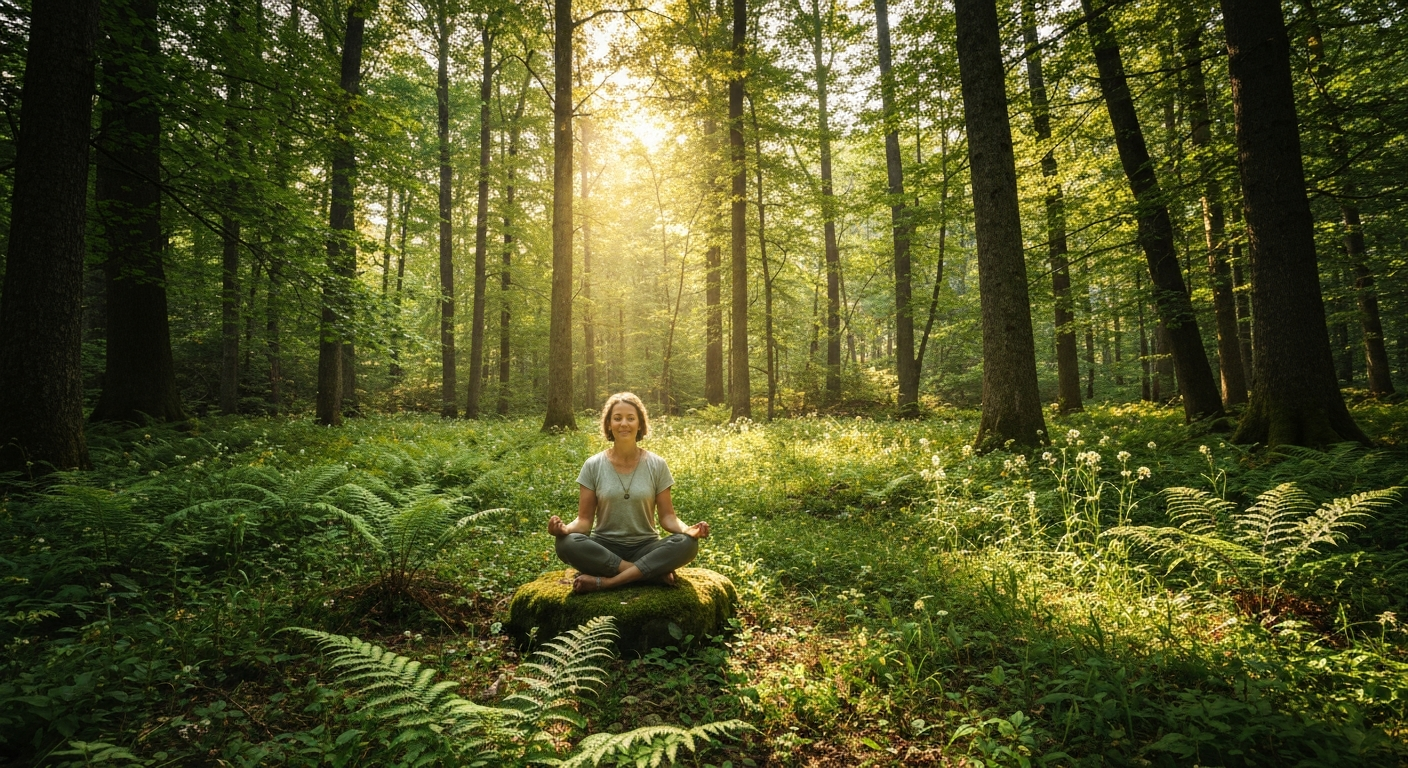
1. Grounding Meditation (The Simplest Starting Point)
Grounding — sometimes called “earthing” — is the practice of directing your full attention to your physical connection with the earth. It’s the easiest outdoor meditation because it requires almost no instruction and works even when your mind is racing.
How to Practice
- Find a patch of grass, sand, or bare earth. Remove your shoes if you’re comfortable doing so.
- Stand with your feet shoulder-width apart. Close your eyes or soften your gaze.
- Direct all of your attention to the soles of your feet. Feel the temperature of the ground. Notice the texture — is it soft, firm, cool, warm?
- Imagine roots growing from your feet deep into the earth. With each exhale, let tension drain down through those roots into the ground.
- Stay here for 5-10 minutes. When your mind wanders, return attention to the soles of your feet.
Why It Works
Grounding works on two levels. Psychologically, it anchors your attention in a vivid physical sensation, breaking the cycle of anxious thinking. Physiologically, direct contact with the earth may influence the body’s electrical charge — preliminary research in the Journal of Environmental and Public Health suggests that earthing reduces inflammation markers and improves sleep quality, though more research is needed.
For anyone dealing with anxiety, this practice pairs well with the techniques in our meditation for anxiety guide.
2. Walking Meditation in Nature
Walking meditation transforms an ordinary hike or park stroll into a focused awareness practice. Unlike seated meditation, it keeps your body active — which makes it ideal for people who find stillness difficult.
How to Practice
- Choose a path where you can walk slowly without worrying about traffic or obstacles. A park trail, garden path, or quiet beach works well.
- Walk at about half your normal speed. Let your arms hang naturally.
- Coordinate your awareness with your steps. Feel your heel contact the ground, the roll through your foot, the lift of your toes.
- After 2-3 minutes of foot awareness, expand your attention to include your surroundings. Notice colors, sounds, smells, and temperature without labeling or judging them.
- When you catch yourself planning, remembering, or narrating, gently return to the sensation of walking.
Why It Works
Walking meditation engages the body’s proprioceptive system — your internal sense of where your body is in space. This provides a constant, moving anchor for attention that many people find easier to maintain than breath awareness alone. The outdoor setting adds layers of sensory richness that keep the practice engaging.
Thich Nhat Hanh, the Vietnamese Buddhist teacher, considered walking meditation one of the most accessible practices for modern people. His instruction was simple: “Walk as if you are kissing the earth with your feet.”
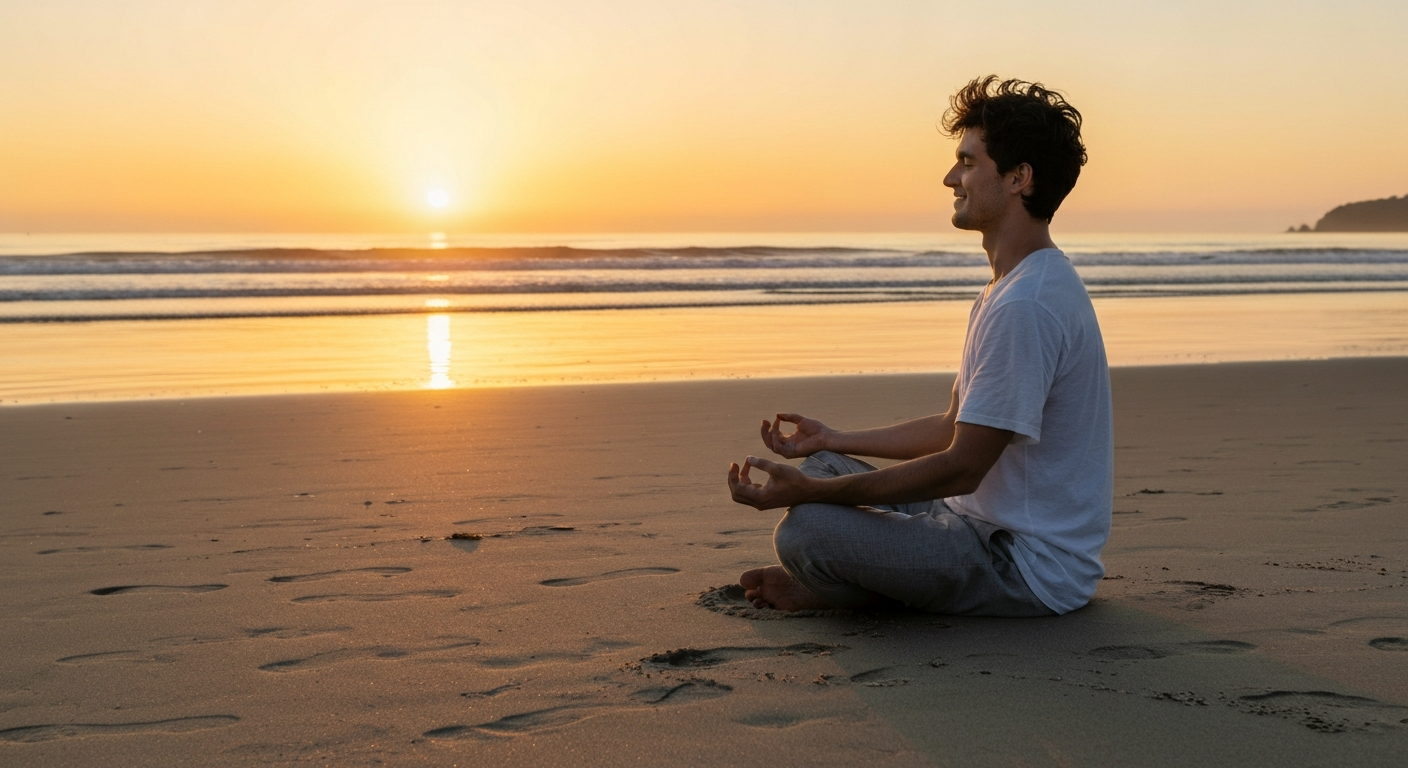
3. Sensory Awareness Meditation (The Five Senses Practice)
This practice systematically moves through each of your five senses, using the natural environment as a meditation object. It’s particularly effective for people who struggle with breath-focused meditation because it gives the mind something vivid and constantly changing to engage with.
Free Meditation Guide
Get our 20-page beginner's guide with 5 techniques
and a 7-day meditation challenge.
No spam. Unsubscribe anytime.
How to Practice
- Sit or stand comfortably in any natural setting — a garden, park, forest, or your own backyard.
- Sight (2 minutes): Soften your gaze and take in the full visual field without focusing on any single object. Notice movement — leaves, clouds, insects. Notice light and shadow. Let your eyes rest rather than search.
- Sound (2 minutes): Close your eyes. Listen to the closest sound you can hear. Then the farthest. Notice layers of sound — they’re always there, but we usually filter them out. Don’t name the sounds; just receive them.
- Touch (2 minutes): Feel the air on your skin. Notice temperature, humidity, any breeze. Feel the ground beneath you. Notice your clothing against your body. Feel gravity holding you.
- Smell (1 minute): Breathe slowly through your nose. Most people are surprised by how much they can smell outdoors when they pay attention — earth, vegetation, moisture, distance.
- Taste (1 minute): Notice whatever taste is present in your mouth. If you have water, take a slow sip and hold it before swallowing. Notice how taste connects to smell.
Why It Works
This practice trains what psychologists call “open monitoring” — the ability to be aware of multiple streams of experience simultaneously without being overwhelmed by any of them. It’s a core mindfulness skill that transfers directly to daily life: better listening, more presence in conversations, reduced reactivity to stress.
4. Sit Spot Practice (Deep Nature Connection)
The sit spot is a practice drawn from indigenous nature awareness traditions and popularized by naturalist Jon Young. It’s disarmingly simple: go to the same outdoor spot every day and sit quietly for 15-30 minutes. That’s it.
How to Practice
- Choose a spot within a 5-minute walk of your home — close enough that you’ll actually go daily. A garden corner, a park bench, a spot under a tree.
- Visit at the same time each day, ideally at dawn or dusk when nature is most active.
- Sit quietly. Don’t meditate formally — just be present. Watch what happens around you.
- Over days and weeks, you’ll notice patterns: which birds arrive when, how light changes through the seasons, how the same place transforms with weather.
Why It Works
The sit spot practice develops what naturalists call “bird language” — the ability to read the behavior of the natural world around you. But its meditative power comes from repetition. By returning to the same place daily, you begin to notice subtlety. Your perception sharpens. You start seeing what was always there but invisible to your hurried attention.
This practice also builds the consistency that makes any meditation habit stick. The anchor isn’t a technique — it’s a place. And places are easier to return to than mental states.
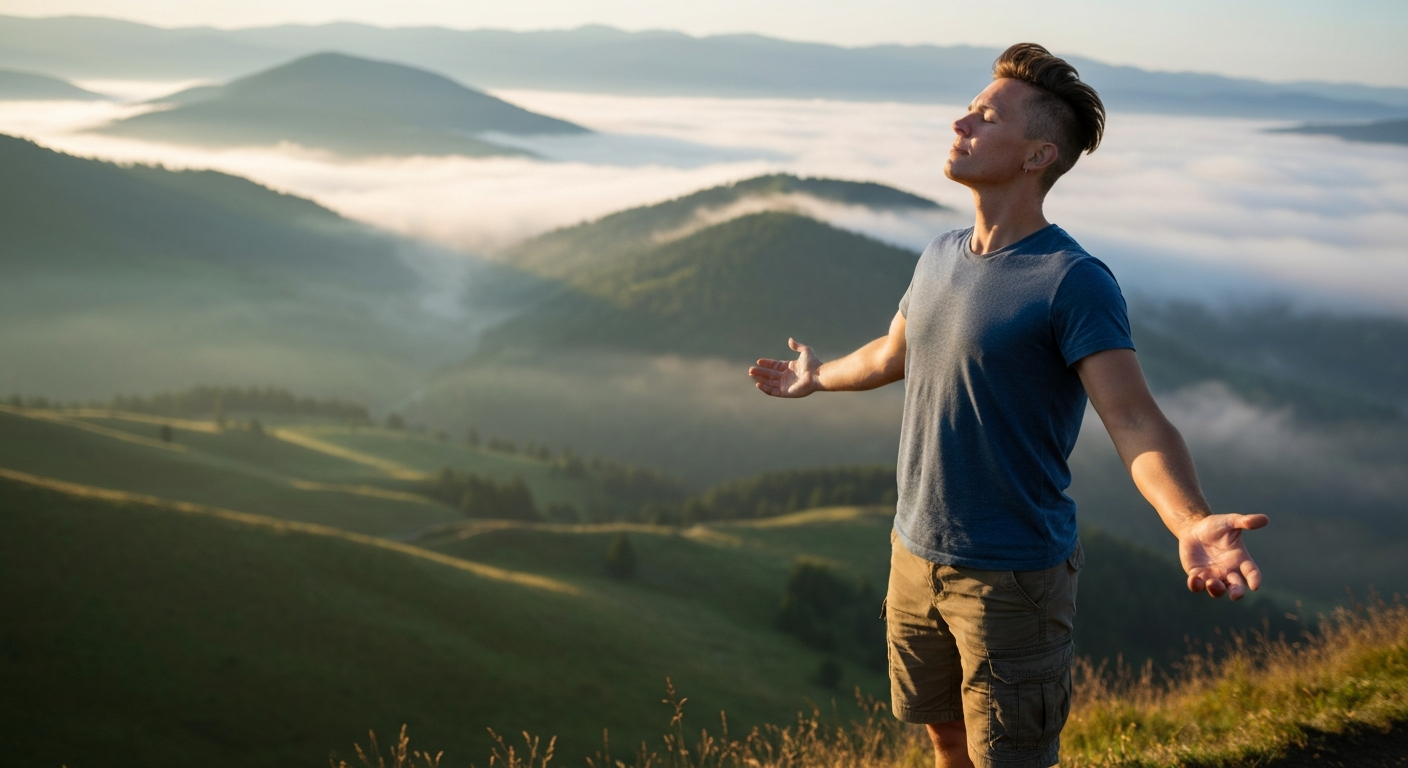
5. Breath-and-Sky Meditation
This practice uses the sky as a visual metaphor for the mind — a technique found in both Tibetan Buddhist and Taoist meditation traditions. It’s best practiced lying on your back in an open area.
How to Practice
- Lie on your back on grass or a blanket in an open area where you can see a wide expanse of sky.
- Let your gaze rest on the sky without focusing on any particular point. Allow your visual field to be as wide as possible.
- Begin following your breath — inhale and exhale — while maintaining this open gaze.
- As thoughts arise, visualize them as clouds passing through the sky of your awareness. Don’t push them away; just watch them drift. The sky remains unchanged regardless of what passes through it.
- Gradually let the boundary between “you” and “sky” soften. You’re not looking at the sky — you’re resting in awareness, which is as vast and open as the sky itself.
Why It Works
This practice leverages a real perceptual effect: gazing at a vast open space activates the parasympathetic nervous system and reduces the brain’s “threat detection” mode. The sky metaphor also provides an intuitive framework for relating to thoughts: they come and go, but the awareness that observes them is always present and undisturbed.
For Taoist practitioners, this practice connects to the principle of wu wei — effortless action. Rather than trying to control the mind, you simply allow it to settle, the way muddy water clears when you stop stirring it.
Practical Tips for Outdoor Meditation
- Weather is your teacher, not your enemy — Light rain, wind, and cold are all rich sensory experiences. Unless conditions are dangerous, consider practicing through mild discomfort. You’ll often find that the “unpleasant” weather you were avoiding becomes the most memorable session.
- Insects happen — If mosquitoes are an issue, use natural repellent or choose a breezy spot. Don’t let minor discomfort become an excuse to skip practice.
- Leave your phone behind — Or at minimum, put it on airplane mode. The temptation to check notifications will undo everything the practice builds.
- Start with 10 minutes — Outdoor meditation doesn’t require marathon sessions. A focused 10 minutes outside delivers more benefit than a distracted 30 minutes indoors.
- Morning is optimal — The transition from night to day is the richest sensory period. Birds are most active, light is changing rapidly, and the air is typically freshest. For a complete morning practice, see our morning meditation routine guide.
The Research on Nature and Mental Health
The benefits of combining meditation with nature exposure are supported by a growing body of research:
- A Stanford study found that a 90-minute walk in a natural setting reduced activity in the subgenual prefrontal cortex — a brain region associated with repetitive negative thinking — compared to walking in an urban environment.
- The Japanese practice of shinrin-yoku (forest bathing) has been studied extensively. Research published in Environmental Health and Preventive Medicine found that time in forests reduced cortisol by 16%, blood pressure by 2%, and heart rate by 4% compared to urban environments.
- A 2022 meta-analysis in Health & Place found that outdoor mindfulness interventions produced larger effect sizes for anxiety and depression than indoor mindfulness programs alone.
These findings suggest that nature doesn’t just provide a pleasant backdrop for meditation — it actively amplifies the practice’s effects on stress, mood, and cognitive function.
Frequently Asked Questions
What is the best outdoor meditation for beginners?
Grounding meditation (Practice 1) is the simplest starting point. Stand barefoot on grass, direct your attention to the soles of your feet, and breathe naturally for 5-10 minutes. It requires no prior meditation experience and provides an immediate, tangible anchor for attention. If standing still feels awkward, walking meditation (Practice 2) is an excellent alternative.
Can I meditate outside in cold weather?
Yes — as long as you dress warmly enough to be safe. Cold air actually enhances certain aspects of meditation: it sharpens sensory awareness and makes the breath more noticeable. Many practitioners find winter meditation sessions particularly vivid. Layer appropriately, protect your extremities, and shorten your session if you feel uncomfortably cold.
How long should outdoor meditation sessions be?
Start with 10 minutes and extend as the practice becomes familiar. Research on nature exposure suggests that benefits begin at around 20 minutes, with diminishing returns after about 2 hours. For most people, 15-30 minutes outdoors provides a meaningful practice without requiring a major time commitment.
Is outdoor meditation better than indoor meditation?
They serve different purposes. Outdoor meditation excels at sensory awareness, stress reduction, and maintaining beginner engagement. Indoor meditation is better for practices requiring deep concentration, like Transcendental Meditation, where external stimulation can be a distraction. The ideal approach includes both: indoor practice for depth, outdoor practice for breadth.
What if I don’t have access to nature?
You don’t need a forest. A small garden, a park bench, or even a balcony with a view of the sky works. The key elements are fresh air, natural light, and some form of living environment (plants, trees, or even just clouds). Urban parks, community gardens, and quiet residential streets all provide enough natural input for effective outdoor practice.
Can outdoor meditation help with sleep?
Research strongly suggests yes. Exposure to natural light — especially morning light — helps regulate your circadian rhythm, which directly improves sleep quality. Combined with the stress-reducing effects of both meditation and nature exposure, outdoor meditation practiced in the morning can significantly improve nighttime sleep. For dedicated sleep techniques, see our meditation for sleep guide.
What is forest bathing and how is it different from outdoor meditation?
Forest bathing (shinrin-yoku) is a Japanese practice of slowly and mindfully immersing yourself in a forest environment. Unlike formal meditation, it doesn’t involve a specific technique — you simply walk slowly, breathe deeply, and engage all your senses with the forest. It’s closer to the Sensory Awareness practice (Practice 3) than to traditional seated meditation. The research on forest bathing shows measurable reductions in cortisol, blood pressure, and heart rate.