The Norse Gods Were Afraid Too
We tend to think of the Norse gods as fearless — immortal beings who swung hammers and rode into battle without hesitation. But that’s not what the myths actually say. The Eddas paint a more complicated picture: gods who knew they would die, who dreaded what was coming, and who chose to act anyway.
That’s what makes Norse mythology uniquely useful for anyone struggling with fear. These aren’t stories about beings who transcended fear. They’re stories about beings who felt it fully and still moved forward. The Norse understanding of courage wasn’t the absence of fear — it was the decision to act in spite of it.
Here are six lessons from Norse mythology that can change how you relate to your own fears.
1. Odin’s Eye: The Price of Seeing Clearly
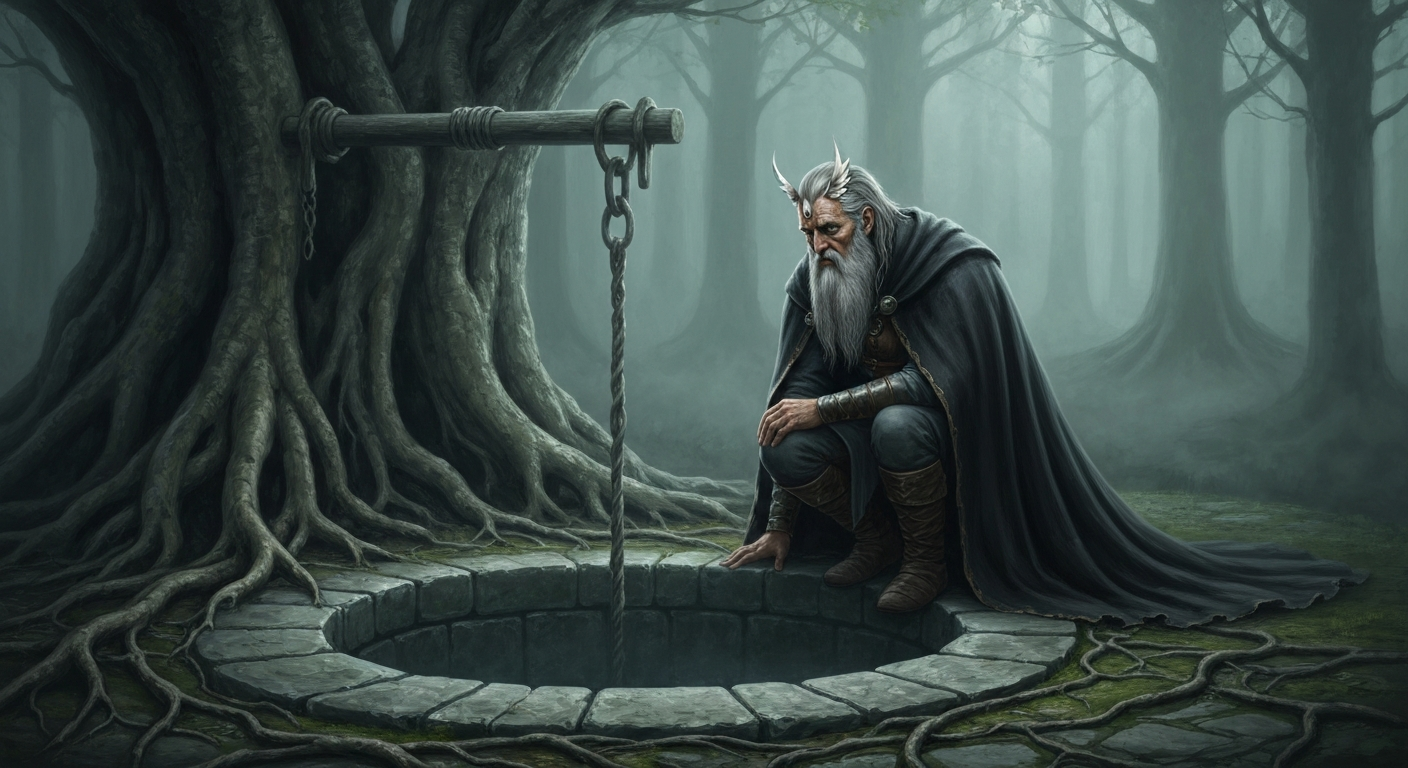
Odin, the Allfather, traveled to Mimir’s well at the root of Yggdrasil seeking wisdom. The well held the knowledge of all things — past, present, and future. But Mimir demanded a price: one of Odin’s eyes.
Odin didn’t hesitate. He gouged out his own eye and dropped it into the water.
This myth isn’t really about physical sacrifice. It’s about what it costs to see things as they truly are. Real self-knowledge — understanding your weaknesses, acknowledging uncomfortable truths, seeing your situation clearly — requires giving something up. Usually, it’s the comfortable illusions that have been protecting you.
The lesson: Growth requires sacrifice. You can’t gain deeper understanding of yourself or your situation while clinging to the comfortable version of reality. Sometimes you have to give up how you wish things were in order to see how they actually are.
In practical terms, this might mean acknowledging that a relationship isn’t working, that a career path was chosen to please someone else, or that a fear you’ve been avoiding is actually running your life. The “eye” you sacrifice is the illusion. What you gain is clarity.
Odin’s Deeper Sacrifice
The eye at Mimir’s well wasn’t Odin’s only sacrifice for knowledge. He also hung himself from Yggdrasil for nine days and nights, pierced by his own spear, to discover the runes. This pattern — the willingness to endure pain for understanding — defines Odin’s character across the myths.
What makes this relevant is that Odin wasn’t forced into these sacrifices. He chose them. He saw that the cost of ignorance was higher than the cost of knowledge, even when that knowledge was painful.
2. Thor at Utgard: When Strength Isn’t Enough
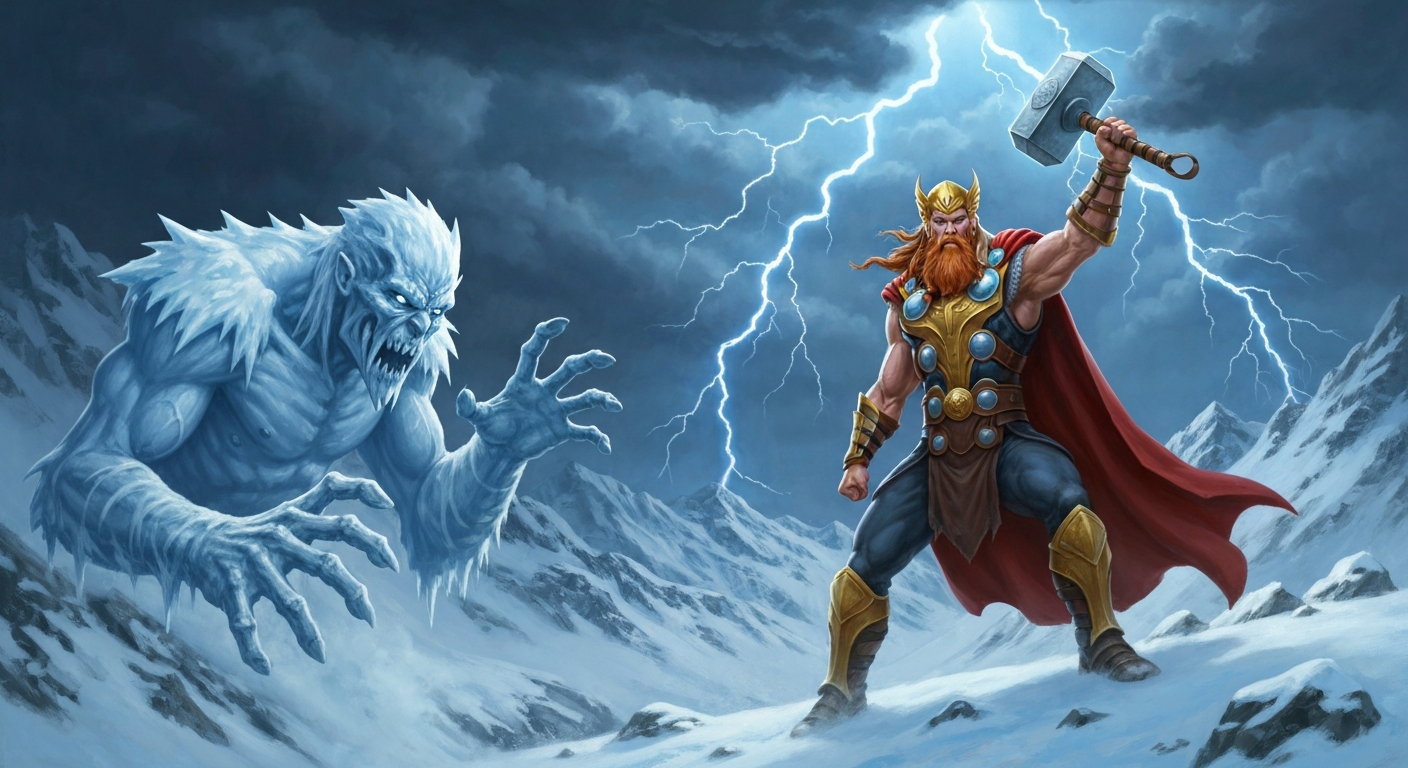
One of the most psychologically rich Norse myths is Thor’s journey to Utgard-Loki’s fortress. Thor, the strongest of the gods, arrives expecting to dominate every challenge. Instead, he’s humiliated.
He fails to drain a drinking horn (it was connected to the ocean). He fails to lift a cat (it was actually the Midgard Serpent in disguise). He fails to wrestle an old woman (she was Old Age personified). Thor, for the first time, confronts challenges that raw strength cannot overcome.
The twist comes when Utgard-Loki reveals the truth: Thor’s “failures” were actually extraordinary. He lowered the ocean’s level. He lifted the world serpent off the ground. He brought Old Age to one knee. His strength was far greater than he realized — it simply wasn’t infinite.
The lesson: Some fears feel overwhelming because we’re measuring ourselves against the wrong standard. You may be doing far better than you think. The anxiety about a new job, a difficult conversation, or a life change often feels like failure — but the fact that you’re engaging with it at all may be remarkable.
Thor didn’t defeat his challenges at Utgard. But he didn’t run from them either. And in facing them, he discovered both his limitations and his true strength.
3. Tyr and Fenrir: Doing What Must Be Done
The binding of Fenrir is one of Norse mythology’s starkest stories about courage. Fenrir, the monstrous wolf, was growing more powerful by the day. The gods knew he would eventually devour Odin at Ragnarok. They needed to bind him.
But Fenrir was suspicious of the magical chain Gleipnir. He agreed to be bound only if one of the gods placed a hand in his mouth as a pledge of good faith. Every god refused — except Tyr.
Tyr placed his right hand in Fenrir’s jaws knowing exactly what would happen. When Fenrir realized the chain was unbreakable, he bit off Tyr’s hand. Tyr didn’t flinch. He had counted the cost beforehand and accepted it.
The lesson: Some fears have real consequences. Tyr’s story doesn’t pretend that courage comes without cost. It acknowledges that the right thing to do is sometimes the thing that will hurt. The question isn’t “will this cost me something?” It’s “is the cost of not acting even greater?”
This applies to difficult conversations you’ve been avoiding, boundaries you need to set, or changes you know you need to make. The cost of action is visible and specific. The cost of inaction is gradual and easy to ignore — until it isn’t.
4. Ragnarok: When You Can’t Win but Fight Anyway
The Norse conception of the apocalypse — Ragnarok — is unlike any other mythological ending. The gods know it’s coming. They know they will lose. Odin will be devoured by Fenrir. Thor will kill the Midgard Serpent but die from its venom. The world will burn and sink beneath the waves.
And they fight anyway.
There is no escape plan, no last-minute salvation, no deus ex machina. The gods march onto the field at Vigrid knowing it is their last battle. They do it not because they believe they can change the outcome, but because meeting your fate with courage is the only meaningful response to an uncertain world.
The lesson: Not every fear can be conquered. Not every problem has a solution. Sometimes the outcome is beyond your control. The Norse response to this reality wasn’t despair — it was defiance. You show up. You do your best. You face what comes.
This is profoundly relevant for anyone dealing with chronic illness, grief, aging, or any situation where “winning” isn’t possible. The Norse definition of a life well-lived wasn’t about outcomes. It was about how you carried yourself through whatever came.
5. After Ragnarok: Destruction Isn’t the End
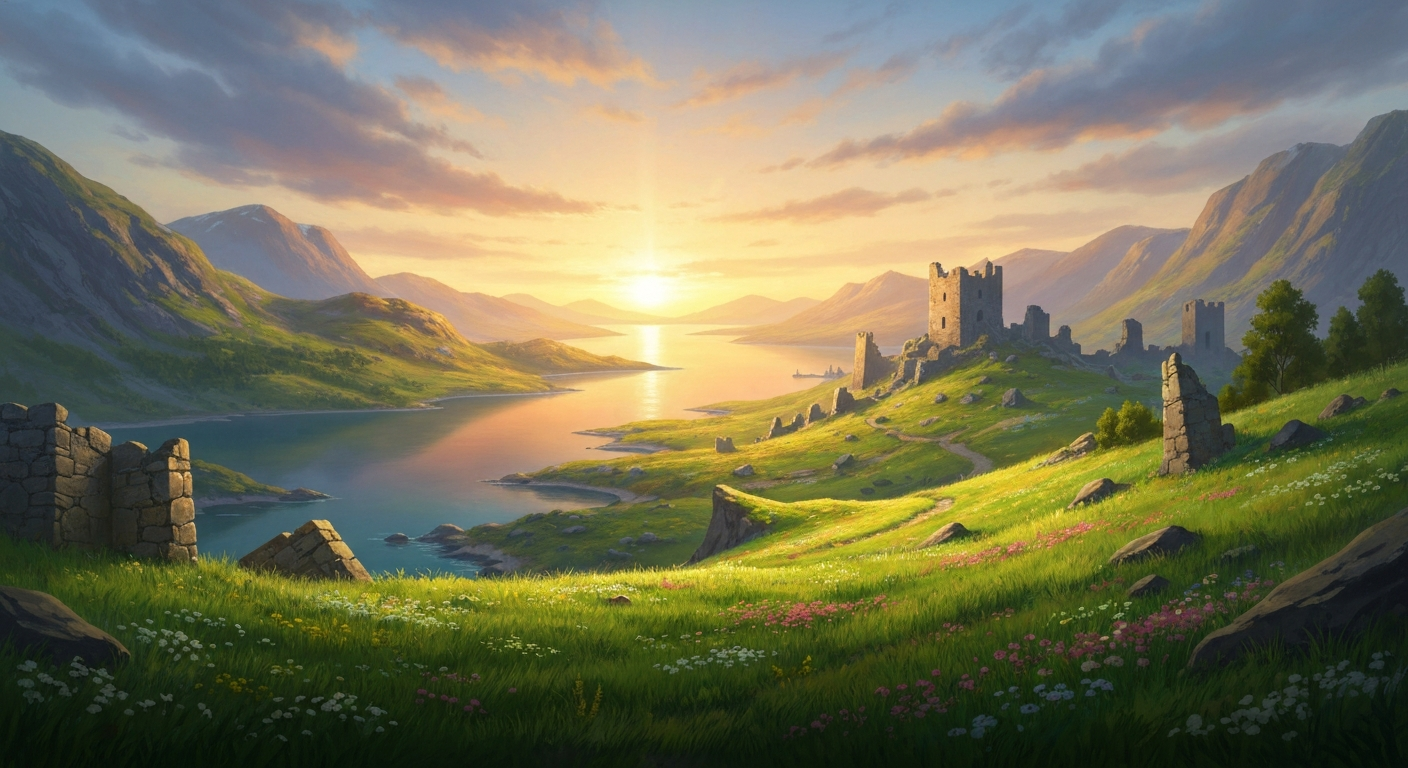
The Eddas don’t end with destruction. After the fire and flood, a new world rises from the sea. Green and fertile, it is inhabited by the surviving gods and two humans, Lif and Lifthrasir, who sheltered in Yggdrasil’s branches. The sun’s daughter shines even brighter than her mother.
This is the part of Norse mythology most people miss. Ragnarok isn’t just an ending — it’s a transformation. The old world, with all its accumulated pain and conflict, is swept away. What emerges is something cleaner.
The lesson: The things you fear most — the ending of a relationship, the loss of a job, the collapse of a plan — are often the beginning of something new. Not always something better in the short term, but something that couldn’t exist while the old structure was still standing.
This isn’t toxic positivity. The Norse didn’t minimize the horror of Ragnarok. They simply observed that destruction and creation are part of the same cycle. The fear of endings is often the fear of transformation — and transformation, while painful, is how growth actually works.
6. The Norns: Accepting What You Cannot Control
At the base of Yggdrasil sit the three Norns — Urd (What Was), Verdandi (What Is), and Skuld (What Shall Be). They weave the threads of fate for gods and humans alike. Even Odin, with all his power and wisdom, cannot change what the Norns have woven.
The Norse relationship with fate was neither passive resignation nor active defiance. It was something more nuanced: you cannot choose your circumstances, but you can choose how you meet them. The Norns determine the shape of your life. You determine its quality through your response.
The lesson: Much of our fear comes from trying to control things that aren’t controllable — other people’s opinions, the economy, our health trajectory, the future. The Norse worldview suggests redirecting that energy: instead of fearing what might happen, prepare to respond well to whatever does happen.
This echoes Stoic philosophy, which similarly distinguishes between what is “up to us” and what is not. The Norse version is grittier — the Stoics sought tranquility; the Norse sought honor — but the core insight is the same: stop fighting reality and start working with it.
Applying Norse Wisdom to Modern Fears
These myths weren’t meant to be admired from a distance. They were told around fires to people who faced real danger — harsh winters, violent seas, uncertain futures. The lessons were practical:
- When you’re afraid to look at a problem honestly — remember Odin at the well. The cost of clarity is real, but the cost of willful blindness is higher.
- When you feel inadequate — remember Thor at Utgard. You may be doing better than you think. The standard you’re measuring yourself against may be literally impossible.
- When you’re avoiding a necessary action — remember Tyr’s hand in Fenrir’s mouth. Count the cost, accept it, and act.
- When the situation feels hopeless — remember the gods at Ragnarok. The outcome isn’t the point. How you face it is.
- When everything falls apart — remember what comes after Ragnarok. Endings create space for new beginnings.
- When you can’t control what’s happening — remember the Norns. Redirect your energy from controlling outcomes to choosing your response.
For a broader exploration of how Norse myths inform modern life, see our in-depth guide on Norse mythology’s lessons on bravery and fate.
The Norse Path Through Fear
What sets Norse mythology apart from other wisdom traditions is its unflinching honesty. These aren’t stories where the hero always wins, where faith conquers all, or where everything works out in the end. They’re stories where the gods themselves face annihilation — and find meaning not in the outcome but in the courage of their response.
That’s a message that resonates in a modern world full of uncertainty. You don’t need to eliminate your fears. You don’t need to pretend they don’t exist. You need to look at them clearly, accept what they cost, and act anyway.
The Norse word for this quality was drengskap — a concept that combined courage, honor, and integrity. It wasn’t something you were born with. It was something you demonstrated through your choices, especially the difficult ones.
If you’re looking for practices to help develop this kind of inner steadiness, meditation for anxiety offers practical techniques for building calm under pressure. And for another ancient tradition’s approach to facing adversity, explore what Greek mythology teaches about human nature.
Frequently Asked Questions
What is the main message of Norse mythology?
Norse mythology’s central theme is that courage in the face of inevitable difficulty is what gives life meaning. Unlike many mythologies where good ultimately triumphs, Norse myths present a world where even the gods face destruction — and find honor not in winning but in how they face their fate. This makes Norse mythology uniquely relevant for dealing with real-world challenges where outcomes aren’t guaranteed.
What does Odin’s sacrifice teach us?
Odin sacrificed his eye for wisdom and hung from Yggdrasil for nine days to learn the runes. These myths teach that genuine understanding requires a willingness to suffer — to give up comfortable illusions in exchange for clear sight. Growth and knowledge always have a cost, and the willingness to pay that cost is what separates wisdom from mere information.
How is Norse mythology different from Greek mythology?
The key difference is the ending. Greek mythology features heroes who can achieve immortal glory and gods who endure forever. Norse mythology is built on the knowledge that everything ends — even the gods die at Ragnarok. This gives Norse myths a distinctive tone: more somber, more honest about mortality, but also more focused on the value of how you live rather than how long.
What does Ragnarok symbolize?
Ragnarok represents both destruction and renewal. The old world — with its accumulated conflicts, broken oaths, and festering grievances — must be destroyed before something new can emerge. Psychologically, it symbolizes the necessary endings in life: the relationships, identities, and circumstances that must be released before transformation can occur.
Can Norse mythology help with anxiety?
The Norse approach to fear and uncertainty can be genuinely therapeutic. Rather than trying to eliminate anxiety (which often makes it worse), Norse wisdom suggests acknowledging the reality of what you’re afraid of and choosing to act despite it. This aligns with modern exposure-based therapy approaches and acceptance-based psychological frameworks. The Norse didn’t seek the absence of fear — they sought the presence of courage alongside it.
Who is the bravest god in Norse mythology?
Tyr is traditionally considered the bravest Norse god. His willingness to place his hand in Fenrir’s mouth — knowing he would lose it — is the defining act of courage in the mythology. Unlike Thor’s bravery, which is paired with immense physical strength, Tyr’s courage is purely moral: he did what needed to be done despite having no advantage and no escape.
What does Yggdrasil represent?
Yggdrasil, the world tree, represents the interconnected nature of all existence. Its roots reach into different realms; its branches shelter the cosmos. It also represents resilience — it endures Ragnarok while sheltering the humans who will repopulate the new world. As a symbol, it suggests that even amid catastrophic change, the deepest structures of life endure.