
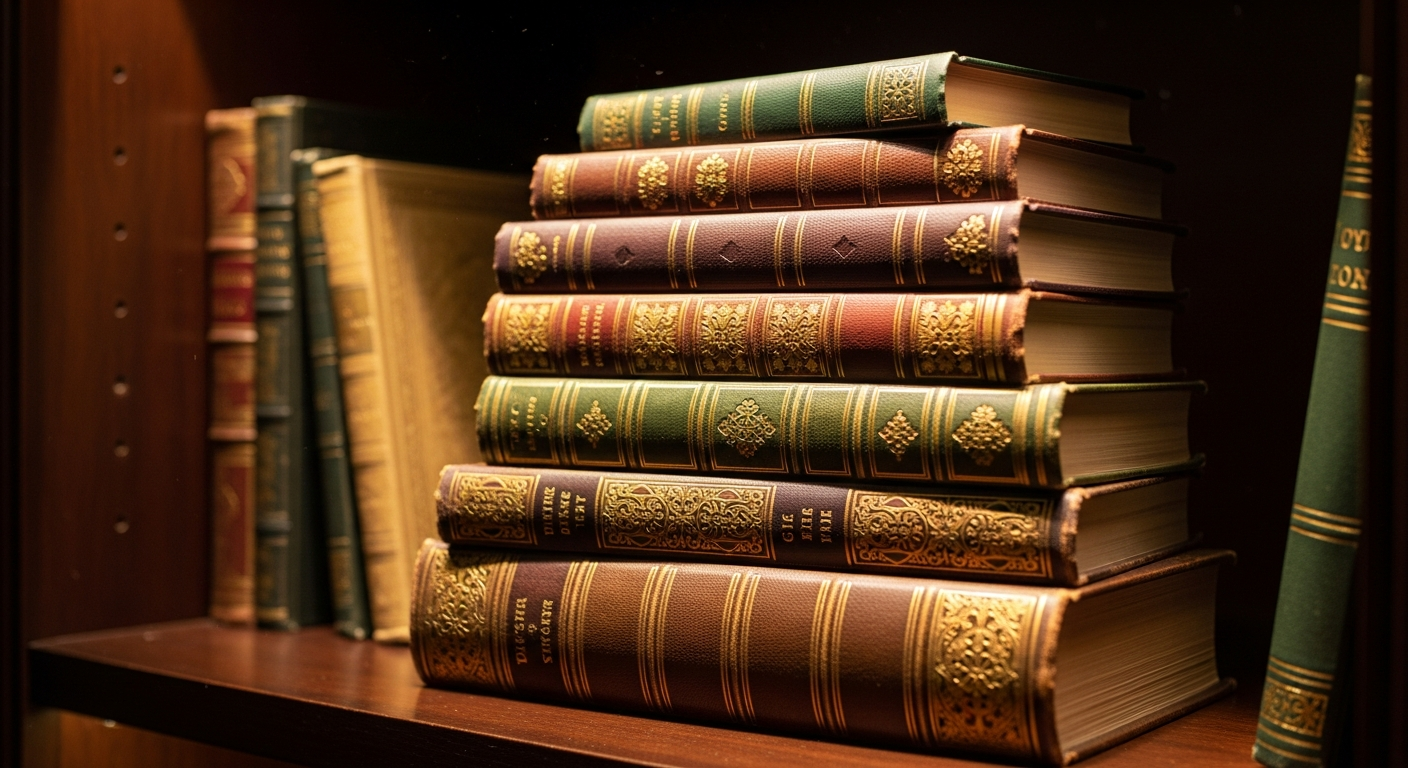
Kahlil Gibran published twelve books during his lifetime and left behind manuscripts that became several posthumous publications. His work spans Arabic prose poetry, English-language parables, philosophical essays, and visual art — a body of work that has sold over 100 million copies worldwide and been translated into more than 100 languages.
This guide covers every major Gibran title, organized chronologically, with summaries and reading recommendations to help you navigate his literary legacy.
Arabic-Language Works (1905–1914)
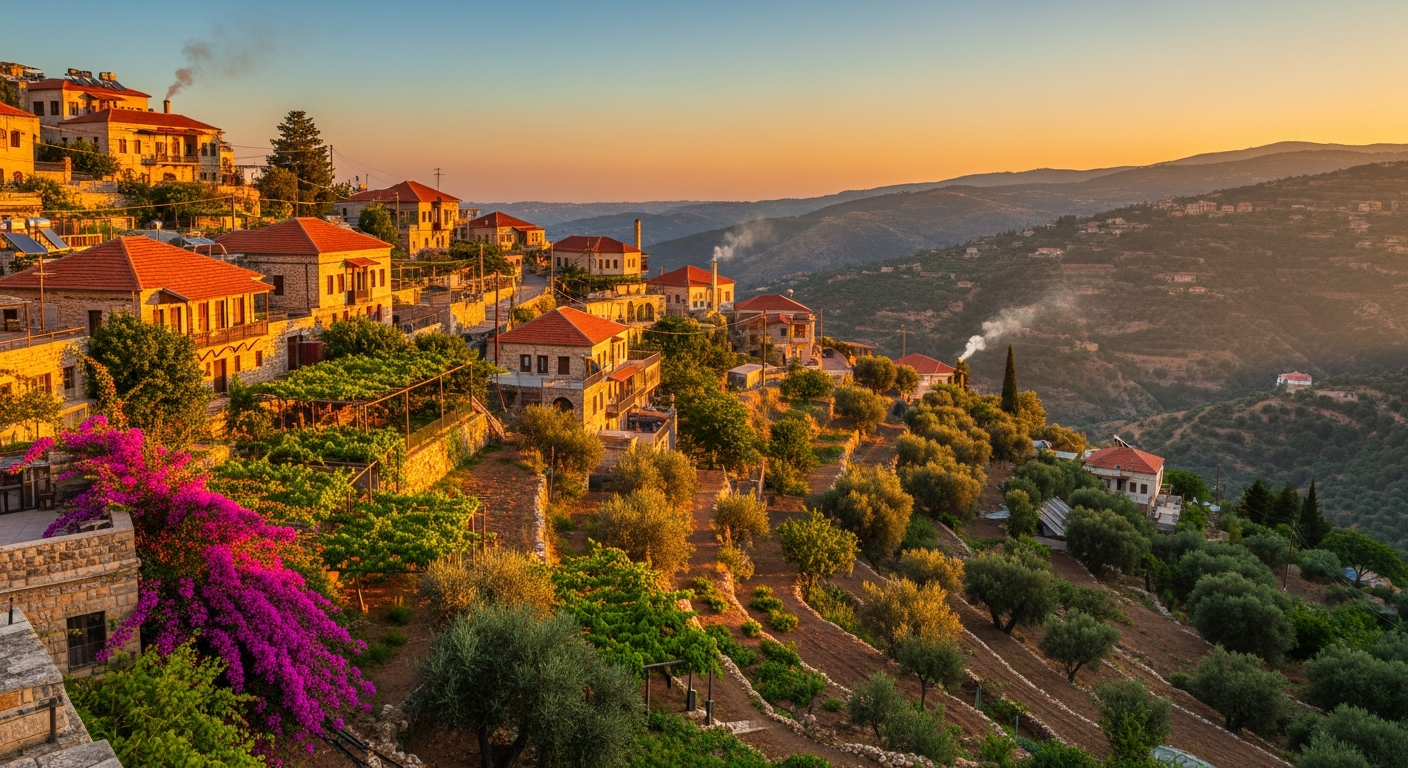
Gibran began his career writing in Arabic, producing works that made him a controversial figure in the Arab literary world. These early books challenged Ottoman authority, institutional religion, and social convention — earning him exile from Lebanon and ecclesiastical excommunication.
Nymphs of the Valley (1906)
Gibran’s first published book — three stories set in rural Lebanon that expose corruption in religious and feudal institutions. The prose is lyrical, the social criticism sharp. It established his voice as a literary rebel willing to confront power directly.
Spirits Rebellious (1908)
Four stories attacking the abuse of authority by clergy and feudal landlords. This book was publicly burned in Beirut’s marketplace and led to Gibran’s excommunication by the Maronite Church. The controversy secured his reputation as a writer who refused to separate art from justice.
The Broken Wings (1912)
Gibran’s only novel — a semi-autobiographical love story set in Beirut. It chronicles the love between a young man and a woman trapped in a loveless marriage arranged for wealth. The book transcends romance to examine how social institutions constrain authentic human connection. Read our full analysis of The Broken Wings.
A Tear and a Smile (1914)
A collection of poems and short prose pieces that captures Gibran’s evolving voice — more introspective than his earlier polemical works, beginning the turn toward the mystical and universal themes that would define his English-language writing. Explore A Tear and a Smile.
English-Language Works (1918–1931)
After moving to New York, Gibran shifted to writing in English — a deliberate choice to reach a global audience. His English prose is distinguished by its rhythmic, biblical cadence and its use of parables and aphorisms to convey philosophical insights.
The Madman (1918)
Gibran’s first English book — 34 parables and poems featuring a protagonist who has shed the “masks” of social convention. The Madman is not insane but free, and the book explores the cost and liberation of authentic selfhood. It introduced English-speaking readers to Gibran’s distinctive parabolic style. Read more about The Madman.
The Forerunner (1920)
A transitional work that refines the parabolic form of The Madman while foreshadowing the philosophical depth of The Prophet. Its parables on justice, self-knowledge, and spiritual courage are among Gibran’s most tightly crafted. Explore The Forerunner.
The Prophet (1923)
Gibran’s masterwork and one of the best-selling books of the 20th century. The prophet Al Mustafa, preparing to leave the city of Orphalese after twelve years, delivers 26 prose poems on the essential human experiences: love, marriage, children, work, joy, sorrow, freedom, death, and more.
Gibran worked on The Prophet for over a decade, and it shows — every sentence is polished to crystalline clarity. The book’s genius is its ability to say something genuinely profound about each subject in language so simple that it reads like something you have always known but never articulated. Read our complete guide to The Prophet.
Sand and Foam (1926)
A collection of aphorisms and short poems — Gibran at his most compressed. Many of his most widely quoted lines appear here: “Half of what I say is meaningless; but I say it so that the other half may reach you.” The book rewards slow, repeated reading. Read our analysis of Sand and Foam.
Jesus, the Son of Man (1928)
Gibran’s longest English work — a retelling of the life of Jesus through the eyes of 77 contemporaries, including Mary Magdalene, Pontius Pilate, and various disciples and observers. Each narrator offers a different perspective, creating a multifaceted portrait that emphasizes Jesus as a human being and spiritual revolutionary rather than a theological figure.
The Earth Gods (1931)
Gibran’s final published work — a dramatic poem in which three gods debate the nature of existence, love, and the relationship between the divine and the human. Published shortly before his death, it represents his most ambitious philosophical statement.
Posthumous Publications
The Wanderer (1932)
Published the year after Gibran’s death, this collection of parables and sayings was assembled from his unpublished manuscripts. The stories are shorter and more pointed than those in The Prophet, often carrying a sting of irony. Explore The Wanderer.
The Garden of the Prophet (1933)
Intended as the sequel to The Prophet — Al Mustafa returns to his homeland and shares teachings with his disciples. Gibran left it unfinished; it was completed and edited by Barbara Young, his assistant during his final years. While it lacks the polish of The Prophet, it contains passages of genuine power.
The Eye of the Prophet (1934)
A posthumous collection of Gibran’s writings on civilization, art, and the human spirit, compiled from his papers and unpublished manuscripts. Read about The Eye of the Prophet.
The Storm (1994)
A late compilation of Arabic writings translated into English, covering themes of political freedom, spiritual struggle, and the relationship between individual conscience and social obligation. Explore The Storm.
Visions of the Prophet (compiled)
A curated selection of Gibran’s prophetic and visionary writings drawn from multiple works. Read about Visions of the Prophet.
Recommended Reading Order
For readers approaching Gibran for the first time, this sequence builds understanding progressively:
- The Prophet — Start here. It is his most accessible and representative work.
- The Madman — His most provocative voice. Short enough to read in one sitting.
- Sand and Foam — His gift for aphorism at its sharpest.
- The Broken Wings — His only novel. Emotional and autobiographical.
- Jesus, the Son of Man — His most ambitious work. Best appreciated after familiarity with his style.
For those interested in his poetry specifically, see our deep dive into Gibran’s poems. For curated selections, explore his quotes on love and quotes on life.
Gibran’s Literary Legacy
Gibran died in 1931 at age 48, from cirrhosis and tuberculosis. His body was returned to Lebanon and interred in the Mar Sarkis monastery in Bsharri, which now serves as the Gibran Museum.
His influence extends far beyond literature. The Prophet shaped the thinking of the 1960s counterculture, was quoted by John F. Kennedy, and continues to appear in graduation speeches, wedding ceremonies, and moments where people reach for language adequate to life’s deepest experiences.
What makes Gibran’s books endure is their refusal to simplify the human condition. Love involves pain. Freedom requires courage. Death is not the opposite of life. These are not comfortable messages, but they are honest ones — and honesty, in the end, is what readers return to.
Frequently Asked Questions
What is Kahlil Gibran’s most famous book?
The Prophet (1923) is Gibran’s best-known and best-selling work. It has sold over 100 million copies worldwide and been translated into more than 100 languages. It consists of 26 prose poems on subjects ranging from love and marriage to work, freedom, and death.
How many books did Kahlil Gibran write?
Gibran published twelve books during his lifetime — seven in Arabic and five in English. Several additional titles were published posthumously from his manuscripts and collected writings, bringing the total to approximately twenty titles.
Did Gibran write in English or Arabic?
Both. His early career (1905–1914) was primarily in Arabic. After establishing himself in New York, he shifted to English for his major works (1918–1931). His English prose was edited by Mary Haskell, his longtime friend and patron. He is considered a significant figure in both Arabic and English literature.
What are the main themes in Gibran’s books?
Love, freedom, death, the search for meaning, the relationship between the individual and society, the unity of all religions, and the sacredness of nature. His Arabic works tend toward social criticism and political rebellion; his English works lean more toward universal philosophy and mysticism.
Is The Prophet a religious book?
The Prophet draws on Christian, Islamic, Buddhist, and Sufi traditions but does not belong to any single religion. Gibran described himself as a spiritual universalist. The book addresses human experience in language that resonates across religious and secular perspectives, which accounts for its extraordinary global appeal.
What should I read after The Prophet?
For Gibran’s provocative side, read The Madman. For his compressed wisdom, try Sand and Foam. For his narrative voice, The Broken Wings is his most emotionally powerful story. For the fullest picture of his literary range, explore our guide to his poems.